The Final Technique For Removing Stripped Screws
How-To: Remove Stripped Scre
Few endeavors can lead to more frustration than combatting a stripped screw, especially for those in the tech or electronics industry where the screws tend to be…well…very small. Successfully braving the situation requires determination, luck, or the proper method!
Below you can learn how to execute our sure-fire method that, when we’ve performed it, has worked 100% of the time.
We call it the ‘Grind and Grip’ technique, a name you’ll soon find to be quite fitting.
What You Will Need
- Screwdriver set for computer/electronics maintenance
- Torx screwdriver bit ranging from T1 to T10
- Flat head screwdriver bit ranging from 0.25x1.5 to 0.5x3.0
Step 1: Grinding Phase
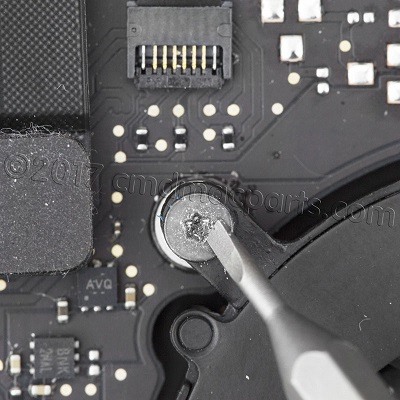
- Place the component with the stripped screw on an appropriate surface - you need space & the ability to use pressure for this solution
- Next, you will need a flat head screwdriver. A good guideline to follow is that the driver bit should be around 1/2 to 2/3 the diameter of the screw's surface
- Take the flat head and bore a hole in the center of the screw. The results should look something like what you see in the picture below in Step 2
Step 2: Dispose of Metal Shavings
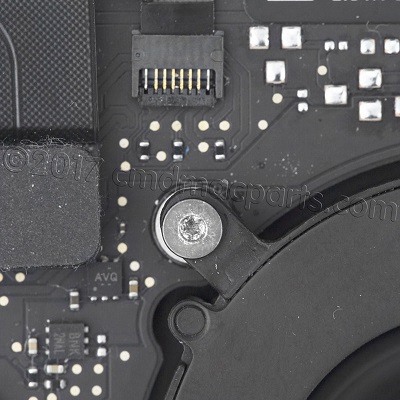
- Now that there is a nice round hole in your screw, you might be thinking that it's even more stripped (and you'd be right!)
- Properly dispose of any metal shavings resulting from the prior destruction, and grab your Torx driver bit. Play with the bit sizes until you find one that just barely fits in the freshly bored hole
- Once a suitable Torx bit has been found, grab the screwdriver and prepare for the "Grip Phase". Here the stripped screw will finally be expunged
Step 3: Grip Phase
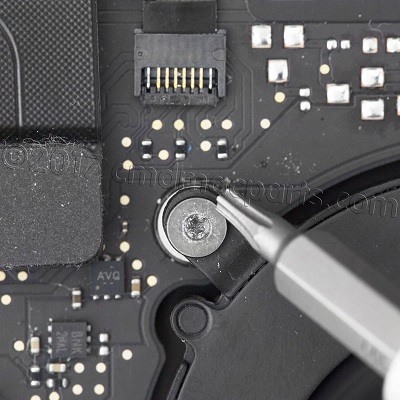
- After placing the right size Torx bit in the hole, apply pressure and begin twisting counter-clockwise
1. Pressure - be sure to apply enough pressure while twisting so that the bit can grip the screw
2. Bit size - it's also possible that the chosen bit is too small for the hole, so double-check that as well
Now that the stripped screw is gone, you’ve successfully performed the ‘Grind and Grip’ technique!
We hope this solution can be of some use for future endeavors and would appreciate any feedback, concerns, or comments to be posted below.
Like this post
About the author

16 comments
Leave a comment
Recommended posts
High Sierra and Testing RAM
With macOS 10.13, otherwise known as High Sierra, Apple introduced an ambitious EFI update. Several of the changes include: the introduction of the Apple File System, support for NVMe drives, and the usual batch of security updates. However, these EFI updates can cause some unwanted behavior when you test your Apple computer’s memory. At Beetstech, we use a long-time industry standard, MemTest86 to perform a comprehensive test of each computer’s RAM.
But never the type to blindly accept test results, strange testing outcomes led us to discover a bug in MemTest86 affecting computers running the new EFI firmware. In short, the newly updated EFI causes MemTest86 to incorrectly fail certain tests. But there is good news: while normal operation of MemTest86 is limited under these new EFI updates, we also discovered some simple workarounds for testing your Apple’s memory in MemTest86.
So let’s dive into how we discovered the MemTest bug, devised a reliable work-around, and get into some nitty gritty details of MemTest86 operation.
MacBook Air Power-On Pads – Location & Use
They go by “jumper pads”, “short-circuit pads”, “power pads”, and “power-on pads”. Whatever you call them, there are two bits of metal on your MacBook logic board that can force your laptop to boot up, even if the power button won’t do the trick.
OEM MagSafe Chargers vs Cheap Imposters: Teardown for Truth
Anywhere premium products are produced, there are unsavory folks trying to make a quick buck selling cheap knockoffs. It happens in every industry, from clothes to food to tech. But in recent years, counterfeit electronics have surpassed nearly all other categories of counterfeit goods by dollar value, and Apple, being the de facto high-end electronics manufacturer, makes for a prime target.
But you’d never be caught buying counterfeit electronics, because you can tell the difference, can’t you?
The Ultimate Guide to Apple’s Proprietary SSDs
Remember the good ol’ days of carrying a spare battery, upgrading your own RAM, maybe even adding a second hard drive? If you’re an Apple user, those luxuries may be behind us, but upgrading your own solid state drive is still a privilege the Apple overlords allow us to have, for now that is.
Despite retaining the ability to upgrade your own SSD, ever since Apple introduced their proprietary “blade” SSDs in 2010, the task hasn’t been as simple as it once was. Apple talks up read and write speeds, but they rarely dive into the nitty gritty details of the technology behind the SSDs they use — drives specially designed only for Apple computers.
After countless questions, both from customers and our own staff, we decided to start our own investigation into the hardware involved. You have to be a bit of a private eye to uncover the secrets behind these drives, and the deeper we looked, the more surprises we found.
Your Hard Drive Cable Is A Ticking Time Bomb
Owners of a Unibody MacBook Pro laptop are probably already aware that failure of the hard drive flex cable is a common issue. While it affects just about the entire Unibody lineup, the Mid 2012 MacBook Pro 13″ (Model A1278) is especially prone to this type of failure.
What is it that makes the Mid 2012 release special in this regard? A design flaw in the flex cable that seems to be compounded by the properties of the aluminum housing.
Our repair services department noticed this issue when they’d replace a bad cable, only to have the customer return a few months later with another bad cable. And possibly again with yet another bad cable. It didn’t matter if we used a used cable or a new cable in the replacement. Customers kept returning with the same persistent issue. We had to figure out what was causing the issue and find a solution.
Holy crap, this actually worked to get a stripped screw out. I wasted €40 on special stripped screw tools that didn’t work before I found this blog post. Amazing.
Glad we could help!
Hmmm, solid technique. Took me a few tries on different screws but now its working every time for me. How does one discover this strategy in the first place?
Wow – worked perfectly. Thank you!
Glad it worked for you, Angelique! Thanks so much.
Got a stripped screw out of three required to remove the DVD drive. Since I was planning to put my HDD, which doesn’t require a screw at all to keep it in place, I decided to jerk the DVD drive away after removing the other two screws, resulting in broken metal lol. The stripped screw? Still there. Feck it. Wish I’d read this article so I could properly unscrew it.
Why do you need this process? Is it really important?
As a repair technician, I can attest to the usefulness of this process. It works like a charm. If you find another method that works well for you, we would love to hear it!
It’s unclear in this description why someone would choose to use a slotted screwdriver bit as a drill, if that’s what is being suggested. Are you drilling by hand? How do you keep the “bit” centered on the screw head? I’m NOT saying your method does not work. There just should be more description about how you accomplish what you’re describing here.
I’m a machinist by trade, and have dealt with hundreds of “stripped screws” and damaged and stuck fasteners of all sizes. The term “stripped screw” is usually applied to a screw or bolt who’s threads are damaged by over tightening or cross-threading and then over tightening. What you are describing is a damaged screw head “slot”, a standard term left over from the days before phillips heads, and Torx and square drives became ubiquitous. A mechanic or machinist would say you “munged up the slot”, not stripped the screw. Damaged slots are usually caused by using the wrong type driver, or driver size to match the actual recess (slot), or not applying enough pressure into the slot while trying to remove a tight or corroded-in screw.
What I’m suggesting for your method is a proper title for what this “repair” is supposed to accomplish, with more description and more pictures about your technique. What your post here actually describes, is “How to get out a tiny computer assembly screw that has a munged-up, or damaged slot.” I’m sure there’s a better way to put that, to title it, but that’s what you’re really doing. You’re not dealing with a “stripped screw.” And, if you strip the threads in the hole that the screw goes into, which is also a pretty common, you’ve got a completely different problem.
I’ve done computer disassembly for cleaning and reapplying thermal paste and similar surgery, so I’m not just a big-bolt mechanic sniping at your method, and I understand why your technique works. I’ve often turned the heads right off a tiny frozen-in screws before I’ve munged up the slot, by not applying enough pressure. After that, I usually just don’t replace the screw and hope for the best. If you’ve got corroded screws holding down your logic board, you probably have other problems as well, and leaving a screw out won’t change much in the long run.
Thanks for posting your method here. Try adding a more detailed description, and more pictures about how you are “drilling” out the slot without a real drill, that’s what’s missing here.
Good Luck
Yes I agree with you being an engineer myself, its not a stripped screw, but a stripped screw HEAD! Those metal filings too, not healthy, small metal particles could be launched unseen while grinding the screw head. I would have a vacuum cleaner running while grinding away at the head. Doing it without is rather risky. Its best to use the proper quality drivers to begin with and not the crap ones.
Yestertech, yes being a motor mechanic and aspiring Macbook repair tech myself, that stripped screw thing annoys the bejesus out of me too. As you said, stripped is when the thread is damaged and a nut for example will no lock onto a thread rod/bolt etc. Also nice technique so thanks. I have used flush cutters quite a bit too and on really small screws like A1706/08 WiFi antenna screws. I just use those cheap flush cutters that they have on Aliexpress and the like
WOW!!!! Thanks for this! I used literally everything: rubber band, screw extraction bit, cut a vertical line. This technique worked!
You write so well–a perfect mix of humor and specificity. I deeply appreciate your suggestions and background descriptions of cause, eg. those for the adhesive tape insulation for the hard drive cable replacement.
Since I was planning to put my HDD, which doesn’t require a screw at all to keep it in place, I decided to jerk the DVD drive away after removing the other two screws, resulting in broken metal lol. The stripped screw? Still there. Feck it. Wish I’d read this article so I could properly unscrew it. iphone repair sherman oaks
This ‘Grind and Grip’ technique seems like a great solution for dealing with stripped screws, especially in the tech and electronics industry. The step-by-step instructions provided are clear and easy to follow. I appreciate the detailed explanation and the recommendation for the appropriate tools to use. I’ll definitely keep this technique in mind for future encounters with stubborn screws. Thank you for sharing!
Just tell me one more thing about do you know about this service iphone repair sherman oaks? how is that?
Best regards,
Joseph Carter
Thank you so much for sharing this! I really needed that information. Shreya